

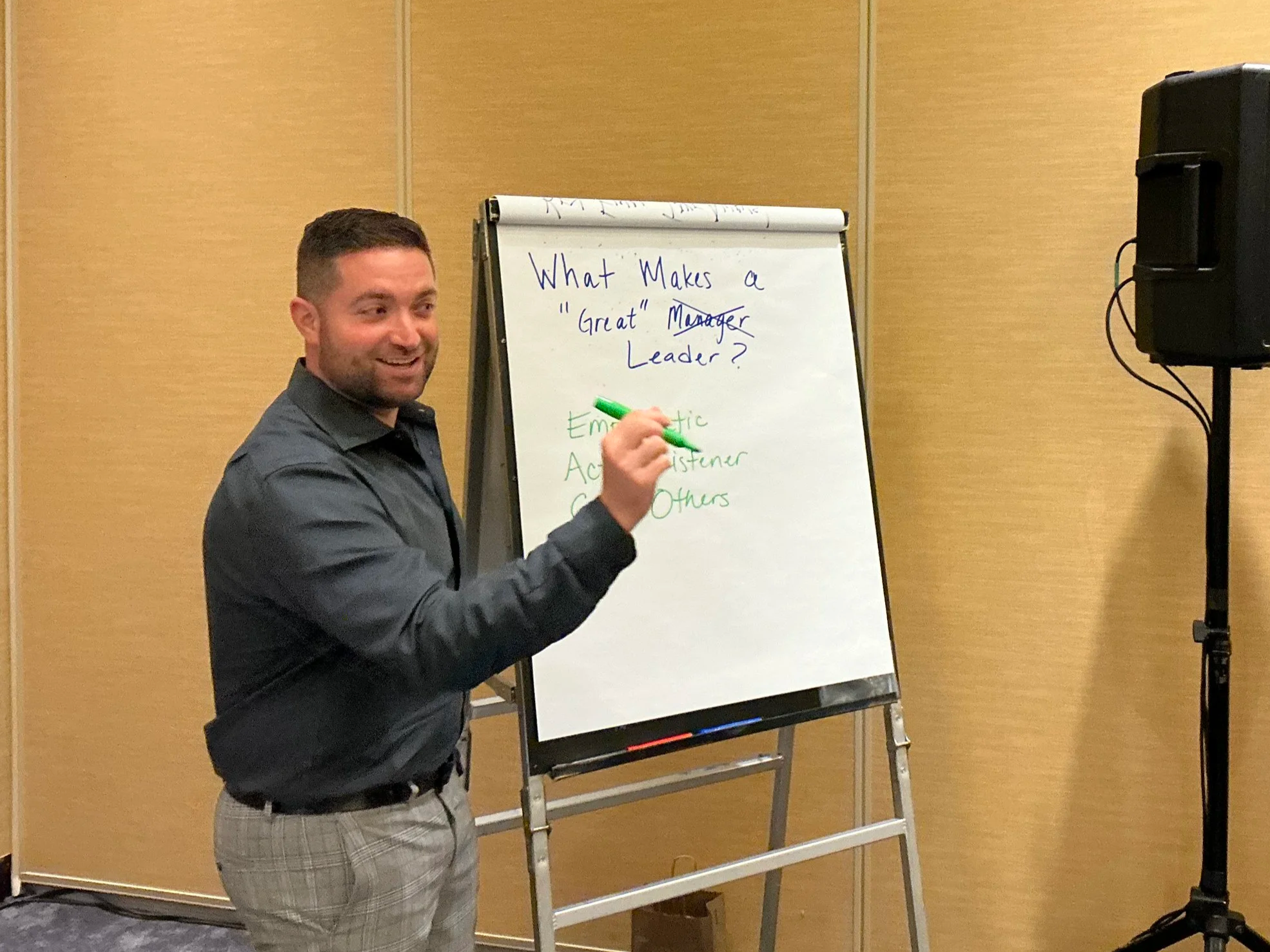
Workshops & Trainings
Authenticity at Work.

Bryce’s workshops and training help people work through the conversations they face every day. Drawing on engineering and EHS experience, he makes uncomfortable topics approachable through honest stories and guided discussion. In-person workshops and virtual training give participants space to reflect, try practical approaches, and connect the ideas to their own work.
What Participants Can Expect
Practical language for starting conversations that feel difficult.
Guided reflection on the risks people weigh before speaking up.
Realistic scenarios that connect the ideas to everyday work.
Opportunities to participate and ask candid questions.
Content adapted to the audience and the session’s goals.
Available Formats

In-person Workshops
Bring people together for guided reflection and practical conversation. Working format options include 60–90 minute interactive sessions, half-day workshops, facilitated leadership conversations, and multi-session learning programs. Confirm available lengths with Bryce.
Virtual Training
Bring the conversation to distributed teams or association audiences. Focused teaching can be paired with polls, chat prompts, and questions to encourage participation. Training can support manager development, ERG programming, safety education, or professional development, as a single session or a series.
Planning note: Virtual training lives within this page at /workshops. Virtual keynote inquiries belong under Keynotes & Speaking. Confirm the delivery format and participation tools for each engagement.
Need help deciding?
Tell us about your team, the situations they are navigating, and what you want them to do differently afterward. Share your preferred date, in-person location or virtual format, approximate group size, and desired session length so Bryce can help shape the right session.
Popular Workshop & Training Topics
-
The Hidden Cost of Hiding
Explore the pressure to hide parts of yourself at work and what that can cost. Participants reflect on what authenticity means in their own setting and what makes it feel possible.
-
Using Evidence to Challenge the Fraud Story
Take a closer look at the fear of being exposed as a fraud. Reflection and practical questions help participants examine the story they tell themselves about their ability.
-
Consider whose perspectives are heard and what makes participation easier. Participants explore practical ways to invite contributions and respond thoughtfully.
-
Examine what helps people raise concerns or disagree. Guided discussion gives teams a chance to consider how their responses affect whether others keep participating.
-
A Risk-Based Approach to Speaking Up
Explore what makes a conversation feel risky and practice ways to prepare. Participants examine the choices behind speaking up and consider how to begin with greater clarity.
-
Connect speaking up with the information leaders need to make safer decisions. Use workplace scenarios to examine how concerns are raised and how leaders respond.
Book Bryce
Tell us a little about your team and what you’d like to explore. Bryce will follow up to discuss a workshop or training that fits your audience.